
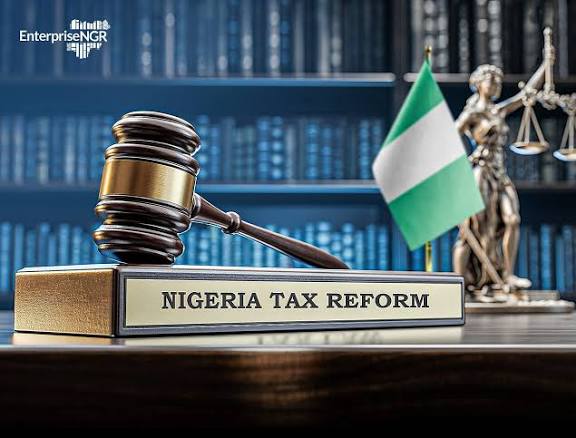
In Nigeria today, The New Tax Law is the number one subject on everyone lips.
- Why People Are Panicking
- Will Every Bank Transfer Be Taxed
- Will Government Deduct Money Directly From My Account
- What About Transaction Descriptions
- Why Are Banks Reporting Some Accounts
- Who Should Really Be Paying Attention
- What The Government Is Trying To Do
- Is The System Perfect
- What You Should Do As An Ordinary Nigerian
- How The New Tax Reform Affects Low Income Earners
- How The New Tax Reform Affects High Income Earners
- How The New Tax Reform Affects Small And Medium Businesses
- Final Thoughts
People have been confused and worried about what The New Tax Law is all about.
If you are confused about the new tax law that started on January 1, you are not alone. A lot of Nigerians are confused right now. Some are scared. Some are angry. Some are just tired of hearing different stories from different people.
Since the year started, there has been plenty talk everywhere. Social media. Twitter spaces. Street conversations. Office discussions. People are saying different things and many of those things are not helping anyone understand what is really going on.
Some people believe that every single transfer they make will now be taxed. Others are saying the government will be monitoring transaction descriptions. Some even believe money will be removed from their bank accounts without warning.
If you have heard any of these things and you are worried, this article is for you. Let us calm down and explain what this new tax reform really means.
First, let us be clear about one thing. The new tax reform did not start to punish Nigerians. It did not start to tax every transfer you make. And it did not start so that government can start dipping hands into people’s bank accounts.
The new tax reform is mainly about how income and business activities are taxed, not how you send money to your friend or family.
Why People Are Panicking
The panic did not start because the law is harsh. The panic started because many Nigerians do not understand how tax works in the first place. For years, many people were not directly involved with tax matters. Salary earners saw deductions and did not ask questions. Small business owners avoided tax offices. Freelancers did not bother.
So when people suddenly heard words like tax reform, reporting thresholds, bank reporting, and digital tracking, fear naturally followed.
Also, misinformation spread very fast. One person hears something small, adds their own interpretation, sends it to WhatsApp, and before you know it, everybody is afraid.
Let us break down the biggest fears one by one.
Will Every Bank Transfer Be Taxed
No. This is the biggest misunderstanding.
Sending money from your account to another account does not automatically mean tax. If that were true, Nigerians would not survive. Paying rent. Sending upkeep. Helping family. Buying goods. None of these everyday transfers are automatically taxed under the new law.
Tax is about income and profit, not movement of money.
If you send money to your mother, that is not taxable income. If you move money between your own accounts, that is not taxable income. If your friend sends you money to help you, that is not taxable income.
What the tax law is interested in is money you earn as income or profit.
Will Government Deduct Money Directly From My Account
No. There is no part of the new tax law that allows government to wake up and remove money from your bank account without your involvement.
Banks are not collecting tax on behalf of government from personal accounts. Banks are not instructed to debit people for tax.
What has changed is that banks are now required to report accounts with very large volumes of transactions to the tax authorities. Reporting is not the same as taxing.
Reporting simply means giving information. It does not mean deduction.
Think of it this way. If someone is moving tens of millions regularly, the tax authority may want to ask questions. Where is the money coming from. Is it business income. Is tax being paid where required.
This does not affect the average Nigerian who is just living their life.
What About Transaction Descriptions
This is another rumour that caused unnecessary fear.
No tax officer is sitting down reading the narration of your transfer to decide whether to tax you. Writing school fees, rent, food, or support in your transaction description does not automatically trigger tax.
Transaction descriptions are not used to tax people randomly.
Tax authorities rely on declared income, business records, and official filings. They do not tax people based on what they type in a transfer narration.
So if you wrote urgent or help or contribution, relax.
Why Are Banks Reporting Some Accounts
Under the new tax system, banks are required to report accounts that cross certain transaction limits within a period.
This is not new in the world. Many countries do this.
The reason is simple. Nigeria wants to reduce tax evasion. Some people earn huge income but pay no tax at all. The government wants to know who should be in the tax net and who should not.
Reporting does not mean automatic punishment.
It means if your account activity shows serious business or income, the tax authority may reach out to understand your situation.
If you are compliant, there is no problem.
If you are a small business or individual earning below taxable limits, there is also no problem.
Who Should Really Be Paying Attention
Not everyone needs to panic.
The people who really need to understand the new tax system are:
• Business owners making steady profit
• Freelancers earning regular income
• Contractors and consultants
• Companies and registered businesses
• High income earners
For these people, the new tax system encourages proper declaration of income and proper filing.
For low income earners and ordinary workers, there are protections built into the law.
What The Government Is Trying To Do
The truth is that Nigeria has a very small number of people paying tax compared to the size of the population. Government revenue from tax is low, and the country relies too much on borrowing.
The new tax reform is an attempt to fix that.
The aim is not to squeeze the poor. The aim is to bring order and fairness into the system.
Small earners are protected. Bigger earners are expected to contribute their share.
Is The System Perfect
No system is perfect. There are still questions. There are still concerns. Implementation matters a lot. How the law is enforced will determine whether people trust it or not.
But spreading fear and misinformation will only make things worse.
What You Should Do As An Ordinary Nigerian
First, stay calm.
Second, stop believing everything you see online.
Third, understand that tax is about income, not transfers.
Fourth, if you earn income regularly, learn your tax obligations.
Fifth, if you are unsure, speak to a tax professional or follow official government statements.
Panic will not help anyone. Understanding will.
How The New Tax Reform Affects Low Income Earners
If you are a low income earner, meaning you earn just enough to survive and take care of basic needs, the new tax reform is not designed to make life harder for you.
One major thing the government tried to do with this reform is to protect people who earn small amounts. Under the new tax system, people who earn below a certain yearly income are either exempt from paying personal income tax or pay very little.
This means that if your income is low, you are not suddenly expected to start paying heavy tax because of this new law.
For salary earners, tax is still deducted through PAYE, but the structure now gives more relief to people at the lower end. This helps them keep more of their money for food, rent, transport, and other basic needs.
Also, the rumours about bank transfers affecting low income earners are not true. Sending or receiving money does not automatically make you a taxpayer. What matters is income, not support or small personal transfers.
So for low income earners, the new tax reform mainly means:
• Better protection from heavy tax
• Higher income thresholds before tax applies
• No automatic tax on bank transfers
• No sudden deductions from bank accounts
In simple terms, if you are just managing to get by, this reform is not targeting you.
How The New Tax Reform Affects High Income Earners
High income earners are people who earn significantly above average, either from salary, business, contracts, consulting, or investments.
For this group, the new tax reform expects more responsibility.
The government’s thinking is simple. If you earn more, you should contribute more. Under the new system, high income earners are expected to properly declare their income and pay the correct amount of tax.
What has changed is not that high income earners are being punished. What has changed is that it is now harder to hide income.
With banks reporting large transaction volumes and better digital records, it becomes easier for tax authorities to notice when someone is earning serious money but not paying tax.
This does not mean every big transfer will be taxed. It means if your income level shows that you should be paying tax, the government expects you to comply.
For high income earners, the new tax reform means:
• More attention on income declaration
• Less room to avoid tax legally or illegally
• Clearer rules on how much tax should be paid
• More focus on compliance rather than punishment
If a high income earner is already paying tax correctly, this reform does not change much. But for those who were avoiding tax completely, the system is now tighter.
How The New Tax Reform Affects Small And Medium Businesses
Small and medium businesses are at the heart of Nigeria’s economy. These include traders, shop owners, online sellers, freelancers, startups, and growing companies.
In the past, many small businesses complained that tax officers disturbed them too much or that they were taxed unfairly compared to their size.
The new tax reform tries to reduce that problem.
For very small businesses earning below certain limits, there are exemptions and reduced obligations. This is to allow businesses to grow without being choked by tax pressure.
For medium sized businesses, the system focuses more on proper record keeping and fair taxation. Instead of multiple taxes from different agencies, the aim is to simplify the process.
Banks reporting large turnovers also affects businesses. If a business account shows steady high activity, the tax authority may want to know whether the business is registered and paying the correct tax.
This is not meant to scare businesses. It is meant to bring order.
For small and medium businesses, the new tax reform means:
• Less pressure on very small businesses
• Clearer rules on when tax applies
• More emphasis on proper records
• Fewer chances of harassment if compliant
The key thing for businesses is simple. Know your income. Keep basic records. Understand what applies to your size. Compliance is now easier than before.
Read Also: FG Addresses Disparity in Handling of Unruly Passengers: Comfort Emmanson vs Kwam 1
Final Thoughts
The new tax law that started on January 1 is not the monster many people are describing it to be. It is not watching every transfer you make. It is not reading your transaction narration. It is not automatically taking money from your account.
It is a system trying to organise how income and business activities are taxed in Nigeria.
Confusion is normal when big changes happen. Fear is understandable. But clarity is better.
Once you understand what the law is really about, you will realise that most of the panic is based on misunderstanding, not reality.