

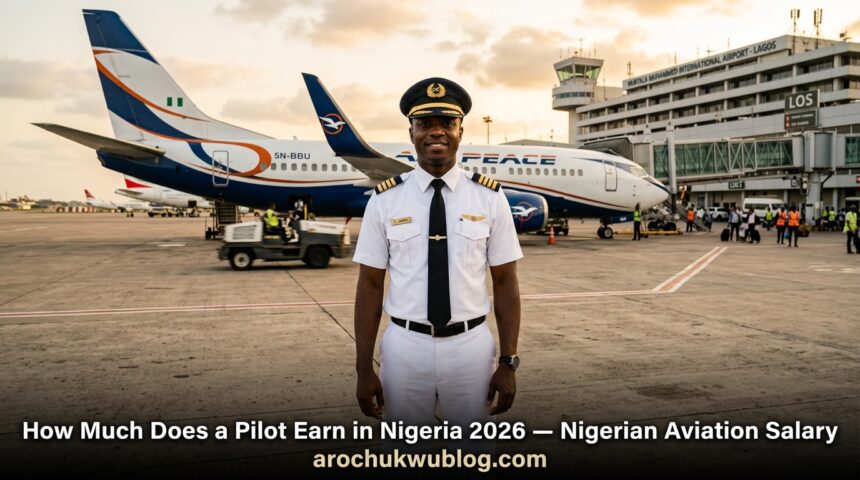
The Sky Is Not the Limit — It Is the Starting Point for Nigeria’s Highest-Paid Professionals
Among all professions in Nigeria, few carry the combination of prestige, technical demand, and financial reward that aviation does. When Nigerians ask what the highest-paying jobs in the country are, pilot always features near the top of the list — and for good reason. But the numbers attached to pilot salaries in Nigeria are widely misunderstood, often exaggerated in some conversations and dramatically understated in others.
The truth is that pilot earnings in Nigeria are not a single figure. They are a wide spectrum that depends on your rank, your airline, the aircraft you fly, whether you operate domestic or international routes, and the number of hours you log every month. A pilot’s salary typically includes several key components: a base salary as the primary payment, flight hour pay that depends on the number of hours flown, benefits such as health insurance, retirement plans, and travel allowances, and bonuses including performance pay for extra duties.
This guide breaks down exactly what pilots earn across every category in Nigeria in 2026 — from entry-level first officers to international captains, helicopter pilots in the oil sector, military pilots, and private jet operators — with real naira figures and practical context.
What Determines a Pilot’s Salary in Nigeria?
Before looking at the numbers, it is important to understand what actually moves the salary needle in Nigerian aviation.
What it is: A pilot’s earnings are determined by a combination of rank, experience, flying hours, airline size, aircraft type, and route category.
The Key Variables
Rank: The gap between a First Officer and a Captain is enormous. Captains always earn significantly more because they carry full command responsibility for the aircraft, crew, and passengers.
Flying hours: Pay often depends on the number of hours flown per month. More hours means more pay beyond the base salary.
Airline size: Larger airlines like Air Peace pay differently from smaller regional carriers. Monthly salaries at regional airlines may range from roughly ₦199,355 to ₦400,000, depending on the airline and individual experience, which is considerably lower than what major carriers offer.
Aircraft type: Captains flying larger, more advanced planes like the Boeing 777 or Airbus A380 tend to earn more than those flying smaller aircraft on short routes.
Route type: International and long-haul routes attract higher pay, bonuses, and sometimes dollar-denominated allowances. Local airlines pay in Naira, while foreign and international contracts, offshore companies, and some private jet services may pay in USD or offer foreign currency bonuses, especially for captains.
Sector: Commercial aviation, private aviation, helicopter operations, and military aviation all have different pay structures.
Entry-Level Pilot Salary in Nigeria 2026 (First Officers and Co-Pilots)
What it is: An entry-level pilot in Nigeria is typically a First Officer or Co-Pilot — someone who has obtained a Commercial Pilot Licence (CPL) and is building flight hours toward eventual captaincy. For those just starting, securing a Commercial Pilot License is the first step, after which entry-level pilots typically work as First Officers or Co-Pilots for local or regional airlines.
Who qualifies: Entry-level pilots are those who have recently obtained their CPL and initial type rating.
How much they earn: Entry-level pilot salary in Nigeria ranges from ₦500,000 to ₦1,200,000 monthly. More broadly, entry-level pilots can expect between ₦300,000 and ₦800,000 per month, with salaries usually higher at larger airlines compared to smaller regional ones.
Practical Example
Pilot Level | Employer Type | Monthly Salary Range Fresh CPL holder (no type rating) | Small regional airline | ₦150,000 – ₦300,000 First Officer (type-rated) | Mid-size domestic airline | ₦500,000 – ₦800,000 First Officer (type-rated) | Major domestic airline | ₦800,000 – ₦1,200,000
Important note: In some cases, new pilots without type ratings may receive lower pay depending on the airline and aircraft. A type rating — the certification to fly a specific aircraft model — is an additional cost and qualification that makes an enormous difference to your starting salary.
Mid-Career Pilot Salary in Nigeria 2026 (Experienced First Officers)
What it is: After accumulating roughly 1,500 flying hours, a First Officer moves into the mid-career category with a significantly stronger negotiating position and higher pay.
How much they earn: With a few years of flying experience, First Officers can expect a significant salary increase, especially after reaching around 1,500 flying hours, with monthly salaries often ranging between ₦900,000 and ₦1,500,000, with further boosts if they begin flying international routes.
Practical Example
Experience Level | Monthly Salary Range | Notes 500 – 1,000 hours (domestic) | ₦500,000 – ₦900,000 | Standard domestic routes 1,000 – 1,500 hours (domestic) | ₦900,000 – ₦1,200,000 | Building toward captaincy 1,500+ hours (international routes) | ₦1,200,000 – ₦1,500,000 | International route supplement
Airline Captain Salary in Nigeria 2026
What it is: The Captain is the pilot in command, with full legal and operational responsibility for the aircraft and everyone on board. With more than 2,000 flight hours and an Airline Transport Pilot License (ATPL), pilots are eligible to become captains and fly larger aircraft.
How much they earn: Captains in Nigeria can expect to earn between ₦2,000,000 and ₦5,000,000 monthly, depending on the type of aircraft they fly and whether they operate domestic or international routes.
Practical Example
Captain Category | Monthly Salary Range Domestic Captain (narrow-body aircraft) | ₦1,500,000 – ₦3,000,000 International Captain (medium-haul routes) | ₦3,000,000 – ₦5,000,000 International Captain (long-haul, wide-body) | ₦5,000,000 – ₦10,000,000+
Important note: Experienced international airline captains typically earn the highest salaries in Nigerian aviation, especially those flying long-haul or high-capacity aircraft, with compensation packages that often include bonuses and allowances that can significantly exceed basic pay.
Average Pilot Salary in Nigeria 2026 — The Full Picture
The average airline pilot salary in 2026 in Nigeria is approximately ₦4.9 million per month, with pay ranging from ₦1.5 million to over ₦17.2 million monthly depending on experience and seniority.
Pilot Category | Monthly Salary Range | Notes Entry-level First Officer | ₦300,000 – ₦1,200,000 | Depends on airline size and type rating Mid-career First Officer | ₦900,000 – ₦1,500,000 | 1,000 – 2,000 flight hours Domestic Captain | ₦1,500,000 – ₦3,000,000 | ATPL required International Captain | ₦3,000,000 – ₦10,000,000+ | Long-haul routes, wide-body aircraft Average (all pilots) | ~₦4,900,000 | Per Glassdoor 2026 data
Helicopter Pilot Salary in Nigeria 2026 — The Oil Sector Premium
What it is: Helicopter pilots in Nigeria operate largely in the oil and gas sector, ferrying personnel between onshore facilities and offshore oil platforms in the Niger Delta. This is one of the most financially rewarding aviation specialisations in Nigeria.
Who qualifies: Pilots with helicopter-specific licences and offshore survival certifications, typically working for aviation contractors hired by oil companies.
How much they earn: Helicopter pilots and specialised flyers command high pay depending on contracts and sectors, particularly in oil and gas. In practice, experienced offshore helicopter pilots in Nigeria earn between ₦3,000,000 and ₦8,000,000 monthly, with additional dollar-denominated allowances on international contracts.
Important note: International and premium airlines and offshore operators offer comprehensive benefit packages including accommodation, life insurance, and dollar-based earnings — making total compensation for helicopter pilots in the oil sector significantly higher than the base naira figure alone.
Private Jet Pilot Salary in Nigeria 2026
What it is: Private jet pilots in Nigeria serve high-net-worth individuals, corporations, and government officials who operate their own aircraft rather than flying commercial.
How much they earn: Private jet pilots typically earn between ₦2,000,000 and ₦6,000,000 monthly, depending on the jet type and the employer’s generosity. Dollar allowances, accommodation, and flexible scheduling make the private aviation sector attractive to experienced captains looking for an alternative to commercial airlines.
Important note: Private jet flying in Nigeria tends to involve fewer flight hours per month than commercial aviation, which means per-flight compensation is typically higher even when base salaries appear comparable.
Military Pilot Salary in Nigeria 2026 (Nigerian Air Force)
What it is: Nigerian Air Force pilots are commissioned officers who fly military aircraft — fighters, transport planes, and helicopters — for national defence operations.
How much they earn: Military pilot pay follows the Nigerian Air Force officer salary scale, supplemented by aviation-specific allowances. Nigerian Air Force officers receive additional allowances and bonuses based on rank, years of service, and specific job assignments, including hazard allowance for officers exposed to dangerous conditions and aircrew allowance for flying duties.
Nigerian Air Force Pilot Salary by Rank
Air Force Pilot Rank | Approximate Monthly Package Pilot Officer (entry) | ₦200,000 – ₦400,000 Flying Officer / Flight Lieutenant | ₦400,000 – ₦700,000 Squadron Leader / Wing Commander | ₦700,000 – ₦1,200,000 Group Captain and above | ₦1,200,000 – ₦2,500,000+
Important note: Military pilot salaries are considerably lower than commercial airline pay at comparable experience levels. However, military pilots receive housing, feeding, healthcare, pension, and other in-kind benefits that do not appear in the cash salary figure.
Pilot Allowances and Benefits in Nigeria 2026
Beyond the base salary, pilots across all categories receive a range of allowances that can significantly boost total take-home pay.
Allowance Type | Detail Flight hour pay | Additional pay per hour flown beyond minimum contracted hours Subsistence allowance | Daily allowance for meals and expenses when away from base Layover allowance | Paid for overnight stays away from home base on long routes International route supplement | Extra pay for operating international flights Housing allowance | Common at larger airlines and for senior captains Medical/health coverage | Most airlines cover pilots and dependants Life insurance | Standard at most commercial airlines Travel benefits | Free or discounted flights for pilots and family members Dollar allowance | For international route captains and offshore helicopter pilots
How Much Does It Cost to Become a Pilot in Nigeria?
Understanding pilot salaries makes little sense without acknowledging the enormous cost of getting there. The cost to become a pilot in Nigeria is approximately ₦12,838,110 according to the Nigerian College of Aviation Technology, Zaria, excluding accommodation and feeding. Additional costs such as type ratings and advanced certifications can further increase the total amount.
Training Stage | Approximate Cost Private Pilot Licence (PPL) | ₦3,000,000 – ₦5,000,000 Commercial Pilot Licence (CPL) | ₦8,000,000 – ₦15,000,000 Type Rating (specific aircraft) | ₦3,000,000 – ₦8,000,000 Airline Transport Pilot Licence (ATPL) | Additional examination and experience costs
Important note: Many Nigerian pilots pursue part of their training abroad, particularly in the United States or South Africa, where certain programmes are more cost-effective or faster. However, all Nigerian pilots must eventually convert their licences through the Nigerian Civil Aviation Authority (NCAA) before flying commercially in Nigeria.
Nigerian Pilots Abroad vs at Home — Which Pays More?
This is a question thousands of aspiring Nigerian aviators ask. The answer is clear. Entry-level pilot salary in Nigeria ranges from ₦500,000 to ₦1,200,000 monthly, while international pilot salary per month starts at €2,667 to €12,500 in developed aviation markets.
Nigerian pilots abroad earn better pay than their counterparts at home, but face higher taxes and cost of living. Local tax rates are generally lower, while many foreign systems tax between 20% and 45%, yet net earnings still tend to be higher due to stronger base pay and allowances.
Pilot salary in Nigeria versus the UK shows a clear gap, with Nigerian pilots earning about ₦600,000 to ₦10,000,000 monthly while UK pilots earn significantly more when converted. UK-based pilots benefit from higher base pay and stronger benefits despite higher taxes and living costs.
Requirements to Become a Pilot in Nigeria
Requirement | Detail Minimum age | 16 years for Student Pilot Certificate; 18+ for CPL Education | Minimum of five credits including Mathematics and English Medical | Pass a Class 1 Medical Examination from an NCAA-approved centre English proficiency | Must meet ICAO Level 4 English requirement Training | Complete PPL, CPL, and type rating through an NCAA-approved flight school Hours | Minimum 200 hours for CPL; 1,500+ hours required toward ATPL Licensing | All licences must be validated or issued by the Nigerian Civil Aviation Authority
Is Becoming a Pilot in Nigeria Worth It in 2026?
Being a pilot in Nigeria can be financially rewarding. While starting salaries for entry-level pilots may be modest, experienced pilots — especially captains and international flyers — earn salaries that are among the highest in the country’s job market. With allowances and bonuses, total earnings for pilots remain among the highest in the Nigerian workforce.
The investment is heavy at the front end — easily ₦15,000,000 to ₦25,000,000 to get fully licensed and type-rated. But a Captain earning ₦3,000,000 to ₦5,000,000 monthly recoups that investment within a year once fully qualified. And with Nigeria’s aviation sector expanding — more routes, more airlines, more aircraft — the demand for skilled pilots is on the rise, making it a promising career choice for aspiring aviators.
Are you an aspiring Nigerian pilot trying to understand the salary expectations, training costs, or career path in aviation? Drop your question in the comments — we break down Nigerian professional salary and career information in plain language at arochukwublog.com.